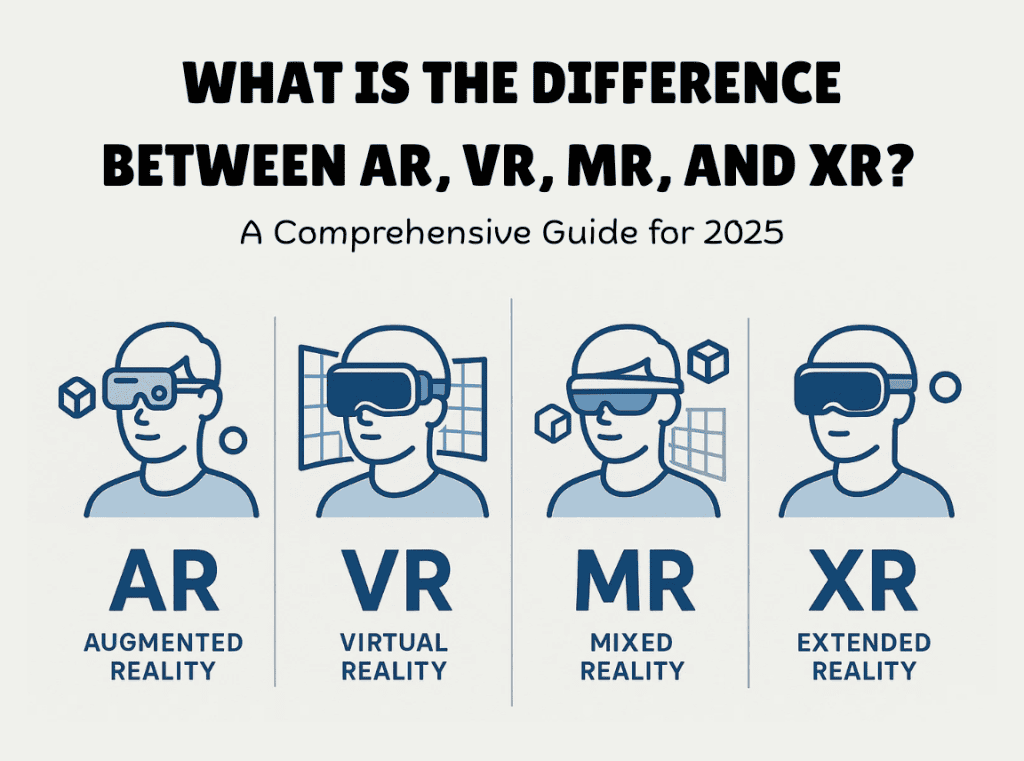
Immersive technologies are reshaping how we interact with digital content, blending the physical and virtual worlds in increasingly sophisticated ways. Terms like Augmented Reality (AR), Virtual Reality (VR), Mixed Reality (MR), and Extended Reality (XR) are often used interchangeably, but they represent distinct technologies with unique capabilities and applications.
For game studios in Singapore and creators of immersive media, understanding these differences is essential to harness their potential effectively, whether for gaming, education, healthcare, or enterprise applications.
Table of contents:
- What is Extended Reality (XR)?
- Augmented Reality (AR) Explained
- Virtual Reality (VR) Explained
- Mixed Reality (MR) Explained
- Key Differences Between AR, VR, MR, and XR
- Why These Differences Matter for Game Studios and Immersive Media
- Future Trends in AR, VR, MR, and XR
- Conclusion
- References
What is Extended Reality (XR)?
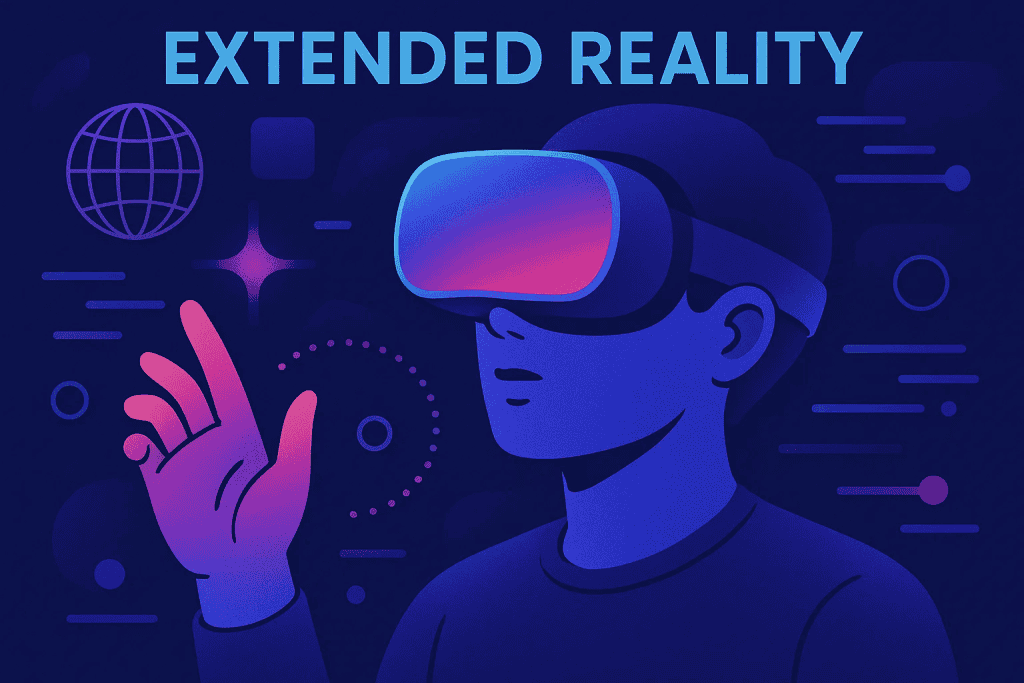
Extended Reality (XR) is the broadest term, encompassing AR, VR, MR, and any future immersive technologies. It describes a spectrum of experiences that either enhance or replace our perception of reality by blending digital and physical worlds. This concept is often visualized as the virtuality continuum, ranging from the fully real environment to a fully virtual one.
- XR technologies rely heavily on spatial computing, enabling devices to understand and map the physical environment to overlay or immerse digital content contextually.
- Devices range from smartphones and tablets to standalone VR headsets and AR smart glasses like the Ray-Ban Meta or Microsoft HoloLens.
- XR is set to play a fundamental role in personal devices, offering immersive experiences that are increasingly mobile, AI-enabled, and socially connected.
Augmented Reality (AR) Explained
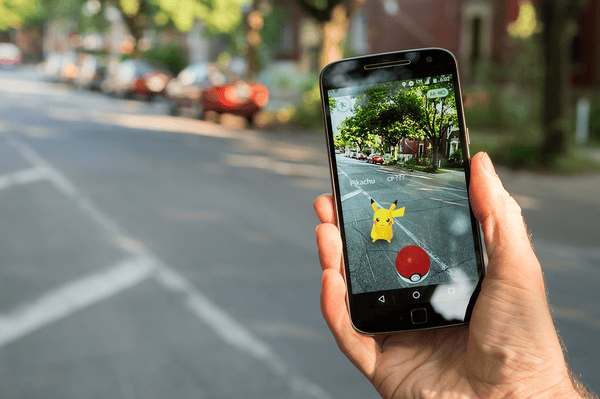
Augmented Reality (AR) overlays digital information on the real world without replacing it. Users see their physical surroundings enhanced with contextual graphics, sounds, or data.
- Devices: Smartphones, tablets, and AR glasses (e.g., Snap Spectacles, Lenovo ThinkReality A3).
- Examples:
- Snapchat’s real-time face filters.
- IKEA Place app for visualizing furniture in your home.
- Pokémon Go, which overlays virtual creatures onto real environments via smartphone cameras.
- Key Technologies:
- SLAM (Simultaneous Localization and Mapping) for mapping surroundings.
- Depth sensing and gesture/eye tracking for interaction.
- AI and machine learning for natural language processing and contextual awareness.
- Applications: Retail, navigation, healthcare, education, and social media.
AR smart glasses are evolving to provide always-on, hands-free experiences with ultra-low power consumption and advanced AI capabilities, enabling real-time voice commands and contextual information delivery.
Contact Zeevium Games to start your first AR project:https://zeevium.com/
Virtual Reality (VR) Explained
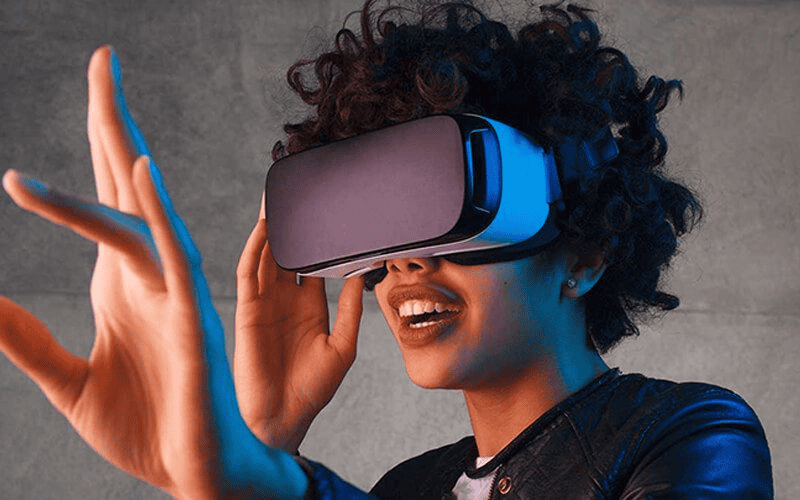
Virtual Reality (VR) fully immerses users in a computer-generated environment, completely replacing the physical world.
- Devices: VR headsets such as Meta Quest 3, HTC Vive, PlayStation VR2.
- Interaction: Controllers, hand tracking, voice commands, and haptic feedback provide rich, immersive interaction.
- Applications:
- Gaming with fully immersive worlds.
- Training and simulation in medicine, aviation, and military.
- Therapy and rehabilitation.
- Virtual meetings and cultural experiences like museum tours.
- Challenges: VR can cause motion sickness and feelings of isolation, and high-quality systems remain costly.
VR provides a fully immersive experience, ideal for scenarios where complete focus and isolation from the physical world are desired.
Contact Zeevium Games to start your first VR project
Mixed Reality (MR) Explained
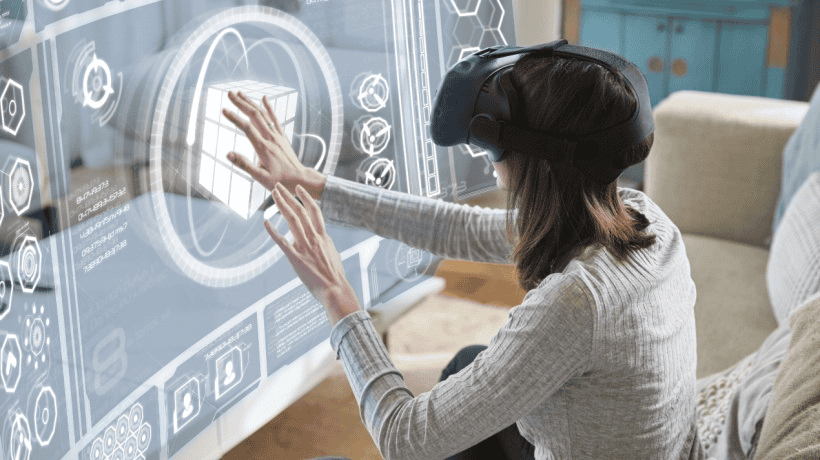
Mixed Reality (MR) blends real and virtual worlds more deeply than AR by enabling real-time interaction between physical and digital objects.
- Devices: Microsoft HoloLens 2, Magic Leap 2, Varjo XR-4.
- Examples:
- Pokémon Go is often cited as MR due to its seamless integration of virtual creatures in real environments.
- MR streaming technology allows streamers to appear inside games, enhancing viewer engagement on platforms like Twitch and YouTube.
- Technologies: Depth sensing, spatial mapping, and advanced sensors enable virtual objects to interact contextually with real-world elements.
- Applications: Industrial design, education, live streaming, collaborative workspaces, and gaming.
MR allows virtual objects to behave as if they exist in the real world, responding to physical surfaces and user interactions dynamically.
Contact Zeevium Games to start your first MR project
Key Differences Between AR, VR, MR, and XR
| Aspect | AR | VR | MR | XR |
| Immersion Level | Partial; overlays digital on real world | Full; replaces reality | High; merges and interacts with real and virtual | Umbrella term for all immersive realities |
| User Interaction | Limited interaction with digital overlays | Full interaction in virtual world | Real and virtual objects interact | Varies depending on AR, VR, or MR |
| Hardware | Smartphones, AR glasses | VR headsets | Advanced spatial computing headsets | All XR devices |
| Use Cases | Retail, navigation, social media | Gaming, training, therapy | Industrial design, education, streaming | Broad immersive applications |
Why These Differences Matter for Game Studios and Immersive Media
- Creative Possibilities: Each technology offers unique ways to tell stories and engage players.
- User Experience: Understanding immersion and interaction levels guides design decisions for accessibility and comfort.
- Localization: XR technologies enable culturally relevant experiences, critical for diverse markets like Southeast Asia.
- Singapore’s Advantage: Singapore’s multicultural talent and tech ecosystem position it as a regional leader in XR innovation.
Future Trends in AR, VR, MR, and XR
- AI Integration: Adaptive narratives, intelligent NPCs, and real-time language processing will enhance immersion.
- Wearables: Lightweight, stylish AR glasses will replace bulky headsets, driving mass adoption.
- Cloud XR: Streaming XR content will reduce hardware constraints and enable seamless cross-device experiences.
- User-Generated Content: Democratization of XR creation tools will foster vibrant, community-driven ecosystems.
Conclusion
While AR, VR, MR, and XR share overlapping technologies, each occupies a distinct place on the virtuality continuum, offering different levels of immersion and interaction. Understanding these distinctions empowers creators to build immersive, engaging, and culturally resonant experiences. For game studios in Singapore and immersive media innovators, mastering these technologies is key to leading the future of digital interaction.
Ready to launch your AR, MR, VR, or XR project? Look no further! If your company or agency is prepared to dive into the world of immersive experiences, contact Zeevium at Zeevium.com today. As an immersive media company, we offer free consultations and help bring your vision to life
References
- Arm Newsroom: XR, AR, VR, MR: What’s the Difference in Reality? (2024)
- Scoop Market: Extended Reality Statistics 2025
- Coursera: Extended Reality vs. Virtual Reality
- LinkedIn Pulse: Difference Between AR, VR, MR, XR, and Spatial Computing
- Interaction Design Foundation: What is the Difference between AR vs. MR vs. VR vs. XR?